Loading


Add to Google
Showing posts with label Computer file. Show all posts

Wednesday, August 7, 2013

How To Back Up Your Files - What Are The Best Backup Solutions?


Digital media is a wonderful thing, but when technology fails, you run the risk of losing a ton of important stuff in the ensuing meltdown. For this reason, finding a good backup solution is critical. After all, imagine how devastated you would be if your computer died or a fire destroyed your home and you lost irreplaceable photos of your children taken when they were babies?

Friday, July 19, 2013

Top Tips For Finding The Right Internet Backup Service For You


Can you remember the last time that you sorted or searched for an important file only to find out minutes later that it had been deleted unintentionally? Let’s face it, this has happened to nearly all us at least once in our lifetime. The colossal amount of documents, song files, videos, and pictures you generate and store each day consumes a large proportion of your personal computer's space. Therefore, it is essential to utilize the internet backup and in order to spare yourself from the potentially devastating consequences of not saving the files at all.

Thursday, August 2, 2012

Employing Data Files Retrieval Programs


The majority of us wait until we unintentionally removed a few files or our system crashes before using recovery software. When that point arrives, we instantly go to web to find data recovery application that we may acquire for free. We put in that application which is accompanied by excellent guarantees only to find that those guarantees bore no fruit - the erased documents are actually permanently lost. 


Your own technique is actually essential when dealing with problems that entail the computer system files. Of course, this roots to the absence of understanding on how files as well as folders are generally saved on the computer disk. Generally, each and every file or perhaps directory is stored as data is structured into pieces or perhaps sectors. Tables are employed for ease and with all of them you can tell which file could be found on a particular hard disk drive. There are flags on the table which are modified any time a file is removed. The place of the information under that document is released to the pc, marking them as free, while the data themselves keep there. Thus, it's quite definitely feasible to recover deleted files up until a fresh application is actually installed in their past spot. We merely have to avoid activity on the concentrate on hard disk drive to stop writing over the area of eliminated file. 


Unerasing records on the system drive (typically marked as C in MS Windows) is challenging because the computer system might actually write on the hard drive without us knowing it. Thus, extreme care should be maintained while performing this action. So, just what is the best solution? It's best if you turn off the computer system promptly and have the retrieval of information as well as data files accomplished on yet another computer system. This is achieved by disconnecting the hard disk from the system and setting it up to other. 


It is safer to take care of erased data files which are on places other than the computer disk. We don't have to take away the drive and install it to a different system as we could recover the documents or perhaps information directly on the computer system. One thing we should remember is the fact that programs usually make short-lived records in these disks that may harm the erased records. The preferred choice would be using undelete software from your detachable Range of motion, i.e. Flash drive or DVD, and carry out the scan of disk for deleted data. This is a very simple approach yet effective. 


A backup Disc should stay close as planning for the moment when we have to recover misplaced information. In the Disc must be the most effective retrieval application you can find for your computer system. In case you don’t wish to use a Compact disc then you could always opt for other read only memory systems such as a flash drive. 


In retrieving information, you will need not only knowledge but also costly resources. However, we could cut costs if we could do this job ourselves or perhaps look for a cost effective application. Recovery of erased information is as effective as your recovery tool. Check out good quality data recovery program and pick the one which fit the personal preference. 


Robert Musser is a blogger who is interested in technology, Site2You and networking


Enhanced by Zemanta

Wednesday, March 28, 2012

Storage Tools To Help You Make Every Minute Count


The very first cell phone I ever laid eyes on was back in college. My professor brought one to class, and it looked like a brick. It had to have taken up her entire purse. A few years later, my older sister got her very first cell phone. At the time it looked so sleek and tiny. A couple of weeks ago, we found that old phone and laughed about how bulky it was and how the only thing it could do was make phone calls. Now, phones really are sleek and tiny and can do just about everything except fold the laundry. Technology moves so quickly that it's sometimes hard to keep up on the ways it can help simplify our lives.


The way that we store electronic files such as photos, documents, reports and presentations has also evolved to make business and personal life flow a little more effortlessly. There never seems to be enough time to finish up everything at work. Before you know it, it's time to pick up the kids, go to the soccer game, make dinner and help with homework. If you're really lucky, you may even find a few minutes to get a little more work done on that project you've been working on, but you probably don't want to waste time running back to the office.  Portable electronic storage devices help to solve this problem. They allow you to carry your electronic files with you wherever you go, so you can take advantage of those spare minutes.


There are a variety of portable electronic storage options that allow you to bring your work with you. Just like cell phones, electronic storage devices are getting smaller and smaller while holding more and more information. Here are a few options you might consider when looking for a way to store and transport your important files. 

External Hard Drives

External hard drives come in a variety of sizes with varying levels of portability. One of the best things about external hard drives is that they can store anywhere from a few hundred GB to more than a terabyte of data. They generally cost around $100 depending on the size. While they are small enough to be portable, ranging from the size of a smart phone to a hard back novel, most have multiple cords to hook up and are somewhat difficult to carry around and use frequently. 

Toshiba 1 TB 2.5Toshiba 1 TB 2.5" External USB Hard Disk Drive (Photo credit: Wikipedia)

Flash Drives

These are a great option for storing data to take back and forth between work and home simply because they are so small. Flash drives can fit in your pocket or even clip onto your keys. They hold more than enough data for most uses and are growing in their storage capacity all the time, while often shrinking in size. Flash drives are also a very affordable option. You can easily find a flash drive with 4 GB for under $20. Despite their convenience, flash drives can be lost or damaged, so it's always a good idea to make sure your important files are saved in multiple places.

Français : Clefs USB. English: USB flash drive...Français : Clefs USB. English: USB flash drives (capacity: 256 MB, 2 GB and three with 8 GB). (Photo credit: Wikipedia)

Cloud Storage

One of the newest and most convenient ways to store your data is by using cloud storage. This type of storage requires no devices that can be lost or broken. Instead, data is stored online through a server. The user signs up through a host company and buys virtual storage space. The great thing about this is that once signed up, you can access your files from anywhere. You can update a file at home, and when you get to the office the next day, it's ready for you to keep going.  You also don't have to waste time transferring files from one PC to another. Once files are stored in the cloud, you can access them from any PC or even your phone. 

Data Storage DeviceData Storage Device (Photo credit: BinaryApe)


Another exciting bonus of using cloud storage is the option to e-print documents and photos. This service allows you to print to a selected printer from anywhere. You can send important documents from home, the airport or even the soccer game to your work printer. This cuts out the step of having to e-mail a document and wait for it to download. Now, you can send it straight to the printer. You also have the option of sending it to a print and copy store, saving yourself another trip to the office. 


When thinking about ways to help your business grow, portable electronic storage options may not be the first thing on your list to take care of, but don't underestimate their value. We lead such busy lives and are pulled in so many different directions all day long. We need to take advantage of those otherwise lost minutes during halftime at a soccer game, while waiting at the airport or right after the kids have gone to bed. These electronic storage devices help enable you to finalize that big project while still living your life.


Meg Hartman is a freelance writer for Venafi.  Venafi is the leader in enterprise key and certificate management.


Enhanced by Zemanta

Thursday, February 9, 2012

How to Back up Your Files

If you’re using the internet and emails, your PC can be vulnerable to viruses. It can also be vulnerable to crashing and breaking – all technology breaks, it’s a fact of life. And if your PC breaks and won’t switch back on you can lose everything that’s saved on it. Companies usually have an IT support services team who help them recover files if a disaster happens and everything gets lost, but if it happened to you at home would you know what to do?


If something accidentally gets deleted you can try doing “System restore” which takes your PC system back to a previous time or date. To do this, go to your Start menu and search for System Restore – it’s easy and the system will walk you through the process.

English: Toshiba 1 TB 2.5Image via Wikipedia

However, the best cure is prevention, and luckily protecting your files isn’t difficult. This first step is using strong passwords and changing them regularly to minimize the risk of hacking. 


Using some sort of external storage that saves your files outside your computer means they will be saved in two places, so if your PC breaks you have everything stored on another device as well. Memory sticks are easy ways or saving, particularly small files. Buying an external hard drive isn’t very expensive and these have more memory space so they allow you to back up lots of files such as your music library.


Even simpler than this is the option of emailing files to yourself. They are then stored remotely on the email host’s server so you can access them from anywhere. Beware though – if your email gets hacked or something happens to your email provider the files will be lost, and highly technical people in computer technology jobs will probably warn you against using this as a method of backup. But as a temporary measure or for small, non-critical files it is an option and means you don’t have to carry any storage devices around with you to access the files.

English: 3 external hard drives: 2011 3.0 TB 3...Image via Wikipedia

There are other options called “cloud” services which store your files in a remote location so they are saved and you can access them anywhere. If you use Windows 7 or Vista they have options available such as Windows Live SkyDrive, but there are other independent providers so do some research as it varies depending on how much space you need and what type of files you’re storing.


Author Bio:

Katy is a blogger within digital marketing with experience within the IT sector and an interest in user experience and helping people make the most of technology.


Enhanced by Zemanta

Monday, January 30, 2012

Using the Windows Repair Tool to Fix System File Error

Repairing computer software related error or issues is always difficult especially if the error is about the computer operating system. If a system files is missing or got corrupted by various means then almost always the repair method would be to reinstall the operating system. This is the easiest way to correct any software related problems, re-installation of the software. An added difficulty for operating system re-installation is that the data in the hard drive must keep intact. Formatting the hard drive is out of the picture before any re installation occur.


Before we go into re-formatting any hard drive we must use all means to reactivate the operating system. Based from my experience reformatting any hard rive that contains information is definitely out of the picture unless the owner of the computer gives specific instructions that you can reformat the hard drive. There several possible ways to revive a windows operating system.


Using the windows start-up repair tool.

Startup Repair is a Windows recovery tool that can fix certain system problems that might prevent Windows from starting. Startup Repair scans your computer for the problem and then tries to fix it so your computer can start correctly. Start-up Repair is one of the recovery tools in the System Recovery Options menu. This set of tools is located on your computer's hard disk and on the Windows installation disc.


If a start-up problem is detected, Start-up Repair will start automatically and try to fix the problem.

If the problem is severe enough that Start-up Repair doesn't start on its own and you can't access the System Recovery Options menu on your computer's hard disk, you can get to the menu and start Start-up Repair by using the Windows installation disc or a system repair disc that you created earlier.


Startup Repair can only fix certain problems, such as missing or damaged system files. It can't fix hardware failures, such as a failing hard disk or incompatible memory, nor does it protect against virus attacks. Startup Repair isn't designed to fix Windows installation problems, nor is it a backup tool, so it can't help you recover personal files, such as photos or documents. To help protect your computer, back up your system and files regularly. For more information, search for "backup" in Windows Help and Support.


Using the tool is very intelligence approach to any windows system error. Based from my experience in repair system related error, this tool will fix 98% of the error. After reviving   the Windows operating system. There is a chance the error has more deeply rooted problem and chances are it will come back again. We need to start windows in safe mode, so that we can copy all the important files on the hard drive of the computer. Why but in safe mode? starting windows in safe lessen the driver being loaded  during the start-up process and less processes running while windows is open means more resources for copying of file. That why we need to revive windows using this tool because we need copy all the data in the hard drive just in-case we need to go to the last resort of formatting the hard drive of a computer.


Repairing a computer is not as easy as it looks it take time and patience to really sort out things. The information contained in a hard drive is always the priority. This must be recovered without using data recovery procedure where it will require a costly solution for getting back all the erased files once the hard drive has been formatted.


Enhanced by Zemanta

Sunday, January 1, 2012

The Network Windows Based File Server

Happy New Year to everybody out there, all of us should have a fresh start and renewed optimism on all the things that we do. That is for God, family, country, work, for others and for us.  As we reflect on the things that did on the year that was 2011, may do our best to improve on them so that it may benefit more people this New Year 2012. It must go beyond the monetize value of the most things that we have.


Personally for me and this blog, I would really like to grow more and produce articles that could really help other in the realm of computer and technology. Especially with new gadgets coming these year, a lot of none technical people are going to use them. This people would need information about the apps that comes with these new gadgets. Articles that contain helpful information about these things would be in demand. 

Okay enough about that, again to everybody on this planet may you have Safe, healthy and Prosperous New Year.


If your company wants a far more efficient file serving experience, a windows storage server might be the smart way to look. The product family gives advanced storage options to small business and big companies alike. It also includes technologies like file reduplication, block I/O storage, and i SCSI software targets for unified files.


A network file server is a computer attached to a network that has the primary purpose of providing a location for shared disk access, i.e. shared storage of computer files that can be accessed by the workstations that are attached to the computer network. The term server highlights the role of the machine in the client–server scheme, where the clients are the workstations using the storage. A file server is not intended to perform computational tasks, and does not run programs on behalf of its clients. It is designed primarily to enable the storage and retrieval of data while the computation is carried out by the workstations.

A typical server Image via Wikipedia

Windows storage server also delivers simplified management and deployment of dual node storage clusters and individual appliances. There are also additional software components and specialized hardware offered by partners of Microsoft in order to create appliances, making it much more versatile. With that in mind, it’s not hard to understand why it’s such a reliable, scalable, and value effective answer for businesses looking for more effective ways to access data.


Companies that are currently faced with challenges about how data in files are moved, accessed, and managed are advised to consider windows storage server. It provides probably the most economical and reliable solutions to those issues. Files and servers are usually distributed widely across entire organizations. However, with storage server’s file services your company can access the files they need when they need them.

The north sideImage via Wikipedia


By utilizing windows storage server in this way, your company should be able to increase the efficiency of their storage management requirements. No matter what the location or the platform is, either, as data will be much easier to handle and more quickly accessible.


Are you aware that you can use windows storage server to keep data that isn’t wanted taken care of? Additionally, it includes management tools that have been greatly improved in order to look after and protect data you want in. The various tools in server services may also aid in reducing administrative overhead and centralize management while at the same time providing crucial info on file infrastructures.


By having these insights into your file infrastructures which are spread out across location or platform or both, you’ll be able to produce on the compliance and availability requirements of file services. These benefits, along with the distributed access to your file services that the storage server provides allow it to be worth the investment.

NetworkImage via Wikipedia

Organizations are able to maintain operations according to their abilities to have their productivity at profitable levels. Handling the growth through economical strategies is critical to increased business volume and expansion. The file services of windows storage server can help your company to grow its departmental information technology services while supporting an ever growing user base.


Other benefits you’ll see from windows storage server include convenient and centralized management for all file services and distributed use of those servers. When it comes to centralized management, you’ll be able to block data and allow the data you want to be cared for properly. Distributed access enables you to manage data no matter what the location or platform.


Enhanced by Zemanta

Monday, September 5, 2011

Computer 101: The DEL and the DELTREE DOS Command

Back in the early days of the DOS or Disk Operating System as the main operating system (OS) there is this two very useful command for erasing files and for erasing entire directory and its sub directories. They are the DEL for delete and the DELTREE for deleting the structure of the directories and all the files contains in it. They are both used to erase or delete items on your hard drive. The DEL command is very easy to use, we just type the command DEL and then press the space and then type the name of the file that we want to erase and press the enter key to execute the command. Presto we just deleted the name of the files indicated opposite the DEL command. But just like all DOS command if the name of the file does not match with the one we type there it will display an error like this " FILE NOT FOUND". To avoid this we have to make sure that every character of the file name that we need to delete must match the actual file name that we type after the DEL command.


DEL command option


The DEL command was used for deleting files or group of files in a single folder or directories. How about if one should delete entire directories and all it's sub directories, is the DEL command still applicable? Well yes it is still applicable but it would take to long do the process of going from one directories to another just to delete all the files they contain. We also have to remember that the DEL command was used only to delete files. Once we have clear out the files in a single directories then we cannot used the DEL command to delete the directory. To remove the specific directory then we need to used the RD DOS command to remove the specific directory. Yes RD stand for REMOVE DIRECTORY, so if a single directory have at-least twenty sub-directory then it would really take some time before we can delete the entire directory structure. This is were  the DELTREE command comes in handy.

But before we get excited about it, there one different between the two commands. The DEL is an internal command, meaning when the DOS OS is loaded we can use it at will. While the DELTREE.EXE command is an external command, meaning the it is not included in the DOS OS. We need to have the disk source where all the command is located and have it copied to the hard drive so that we can use I. Now from the DOS prompt we just need to type the DELTREE and the the name of the directory that we need to erase. Be very aware once we have executed the command all the deleted files and directories will be permanently deleted from the hard drive.

c:\deltree d:\Sample1

Any DOS command that you would like to share?


Enhanced by Zemanta

Monday, January 17, 2011

Computer 101: Un-hiding All Hidden Files after a Virus Infection


Is your USB Flash disk ever been infected by a virus and the result is all you files and folder are gone? But wait when went to the technical support personnel in you workplace they says that it is not gone all your files and folder are still there. Feeling confused, you may say but when i check my USB flash drive i cannot see all my files and folder? But if did a deeper probe, by checking the properties of your USB flash drive, you can see that it indicates that your USB flash drive is half full or almost full depending on how many files it contains before the virus infection. Still confuse, well do not be. Here is what happens, when your flash drive got infected by the virus, it hides all your files and folder and then creates a copy of itself. But that copy of itself is not going to look like a virus, it will look like a regular folder inside your flash drive. The moment you click it, it will even more infect all the other files and folder in your flash drive. Ever seen a folder that when you tried to open it via the double click method, it did not open instead nothing happen, there is no reaction from the folder. A closer will reveal that it is not really a folder it is an application. Take a closer look at the screenshot below.


You can see that a folder is identified as folder and an application is identified as an application in a non-infected drive. To get this kind of view, please select the detail option when displaying the content of your flash drive. Now after the infection happened. All your folder and files is hidden not deleted or erased. You are left with an application that looks like a folder, but when you view it like this you can see that the folder has been classified as an application. When you see a folder that has been classified as an application then definitely it is a virus. Have your flash drive scan immediately to avoid the virus from infecting other places in your flash drive or drive or any type of container. DO NOT click or double click it. Now how do you recover your files if it has been hidden after a virus infection? Well first make sure that you have scanned and cleaned your flash drive. Next attach it to a clean computer, a computer that has not been infected by the same virus. After is has been recognized by the computer. Follow this step very carefully. First look for a utility or program called FOLDER OPTION. The FOLDER OPTION has three tabs they are the GENERAL, VIEW and SEARCH. Please see the screen shot below.


From the screen shot above the three tabs can be seen. The next step selects the VIEW tab. Please see screen shot below. This is where you're going to make the hidden files from your flash drive visible again. For the nest step please select the Show Hidden files, folders and rive option and unchecked all the check boxes for the three following option. The Hide empty drives in the computer, Hide extension for known file types and Hide protected operating system files then clicks the OK button. But wait before you go any further a word of caution, make sure to go directly to the flash drive and do not do to the main hard drive which contains the system files. The system files are hidden by default to protect against accidental erasure. Now that you un-hide it, it is now very open for such an accident. Whatever you do, go directly to the flash drive to get all your files. Now that we have cleared that the next step is to proceed to your flash drive and view it again. After editing the folder option, you can now see your folder. They are now safe to open via the double click. Do not copy the folder because they will be invisible after you redo the folder option. Open the entire folder individually and move all the files inside them to a newly created folder and all your folder will accessible to your once again. Now after recovering your files from the entire affected folder. The entire affected folder can now be deleted from your flash drive. Now for the last part go back to the FOLDER OPTION and put the check mark on all the boxes that you have unchecked earlier and select the other option to return all folder to their normal state. All system files must be hidden the same as before and press the OK button and close the FOLDER OPTION.


Remember when ever a virus has infected your flash drive. It will try to fool you by making you think that all your files have been deleted. Do not be fooled by this kind of virus infection. Make sure that you scan your flash drive and have the virus removed and make a deeper probe to see if all your files is still there. Do not format the flash drive as soon as you see that it appears to empty. Remember you smarter than any virus. 


Enhanced by Zemanta

Wednesday, December 1, 2010

Computer 101: Self Back UP for Windows XP and Vista Continued.


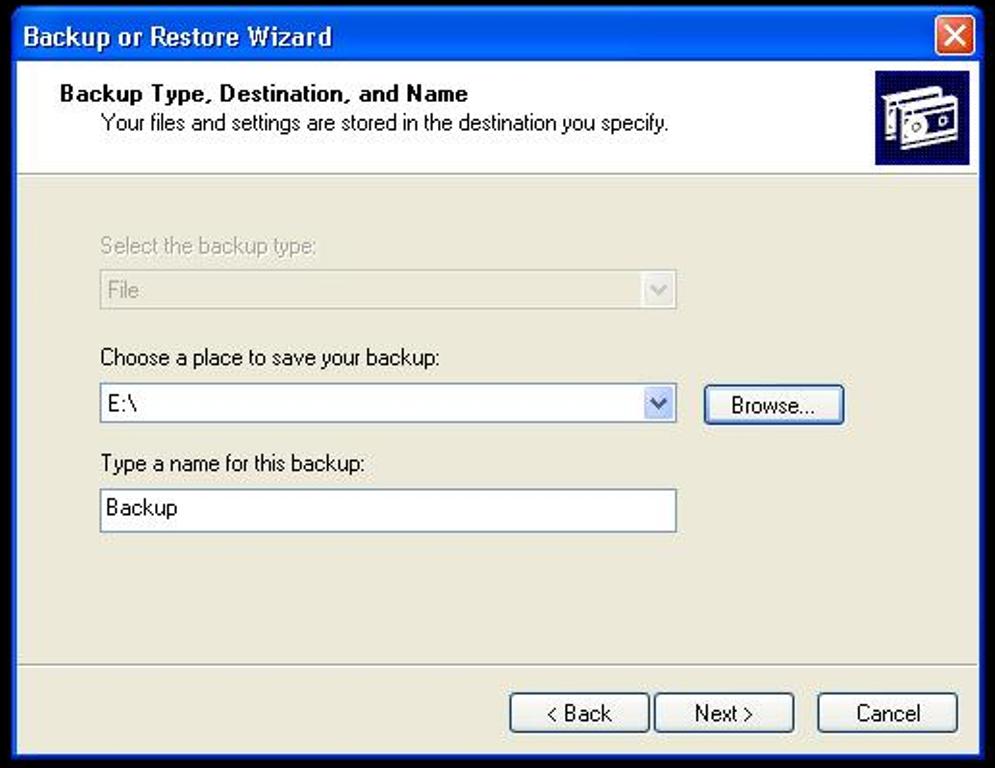
Now to continue on this post for Windows XP and Vista users please see the picture below. Notice we need to select the backup destination by clicking on the CHOOSE A PLACE TO SAVE YOUR BACKUP: IT initially display the drive A which is the default setting. After clicking on i the menu on the side will display since the drive A is not the selected backup destination. If it is not there then click on the BROWSE button. In this picture one can see that the file-name for the backup has already been set and that it cannot be change anymore. 


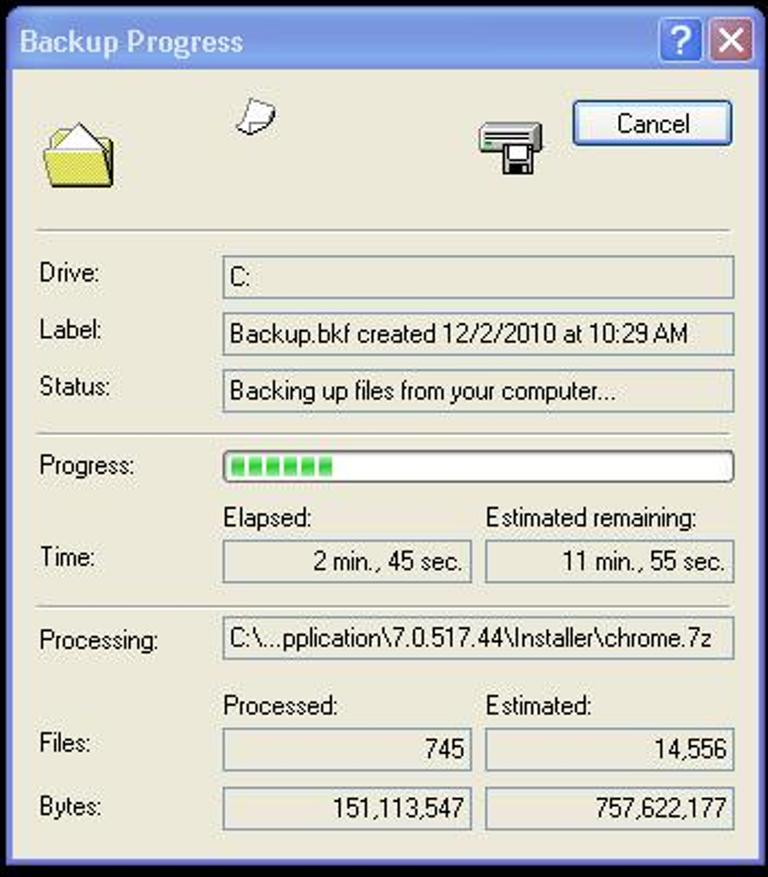
After clicking the Cancel button the following picture will appear. From this picture the location of the backup destination can now be selected. Select my computer to see what devices is available for backup.


Enhanced by Zemanta

Saturday, October 30, 2010

Self Computer Maintenance: Part 3 Using the Defragmentation Tools

Greeting to all, to continue on this series another way of accessing the scan disk tool is by pointing your mouse on the my computer picture or icon then double click to access the item of the icon, then select the hard disk drive you want to be fixed. After selecting the hard disk point the mouse on the disk and press the mouse right button or just press the right click button. From here a menu will appear from that menu select the properties tab at the bottom of the menu and the dialog box for the my computer icon will appear. Then select the TOOLS tab which contain the Scan-disk, Defragmentation and Back-up tools. Then select Scan-disk and press start. Again if it needs to be scheduled then just followed the instruction on the screen.


Now after finishing the repair and diagnostic of the scan-disk, your hard disk is now ready for the defragmentation tools. Now you may ask, what the heck is that tool and what does it do. First of all your hard disk files tend to be fragmented from all those usage day in and day out. You sometimes notice that the response time of your computer has become increasing slow this past days, weeks and months. And your wondering what is going on with this computer, it seems fine, it boot-up well there was no error or problems encounter in its operations. But when i try to access my files they seems a bit slow and yes it boot up well but its a little bit slower compare last week or last months.

So what is going on inside there. Remember your hard needs to spin in order to work and to access data, during that operation sometime your file tend tend to be separated from its component. What????, well actually your file is compose of several parts which i not go into to detail because it will become to technical and will defeat the purpose of this blog. Just know that a file store on the hard disk has many parts okay, and this part seems to be separated from the whole because when where using our computer, some other files is also being used. And there are plenty of them. The job of the defragmentation tool is to correct this error so that you can access your files much faster or same as before. Its put the file most used in the hard disk location where is can be accessed easily and can be loaded mush faster, the other files that is not being used much is put on the farthest part, well something like that. The fragmentation of the hard disk as a whole and your files as well is also fix.

DefragmentationImage by jmehre via Flickr

Well anyhow before is actually begins the fixing of the problem, it first analysis your computer hard disk drive to see how large is the fragmentation. After doing this it will display a report about this in percent like telling you that your hard drive is 50% fragmented and its recommendation of proceeding with the used of the tool to correct this error. Oh i need to mentioned that when your going to this, you cannot used your computer while deffragging is going on. So this one need to be scheduled as well. Now how long will it take to do this stuff. Primarily it defends on your hard disk size and how much files is there to check. If you have a very large amount of files to check.


Six hard disk drives with cases opened showing...Image via Wikipedia

You can do this before you go home, set-it up and start the tools, of course leave it alone once it has begun to work. Just turn off the monitor of you computer and let it be. Another thing If this is your scheduled you report this to you Tech Support Staff so that they will now what your doing and can monitor your machine first thing in the morning. If  your going to do this on your home computer then scheduled it before you go to sleep. Just do as mentioned above and check it the next day to see if its done. I hope i was able to help you in this little way on how to used this tool which is available to you. You don't need buy other tool and software for maintenance purposes. This two will suffice. But again for a more serious problem you need to consult a qualified technician to help you out on your computer problem.


Enhanced by Zemanta

Tuesday, October 19, 2010

The Hard Disk Drive Part 2

As i mentioned on part1 of this blog. Your requirement is important in determining the size of your hard disk. I also mentioned the term IDE, EIDE and SATA, well this are just some of the technology involve in a total hard disk makeup. The other technology is the RPM or Revolution Per Minute.The WHAT?????. You see there are plates inside the hard disk, this circular plate is coated with a certain material that make it able to store your data. Now what is that material, you may ask. I will try to give a less technical explanation of that as i can. I need to maintain a less technical look for all this technical stuff so i can reach out to all the other people who does not need to understand a more technical terms and approaches. Now lets go back to the RPM. You see the plate inside the HDD needs to spin around in order to save and/or access the data or your information. If for somehow it cannot spin well then your hard disk is in a lot of trouble there something wrong with it and it needs to be replaced.

IDE Drive connector


The higher the RPM of your HDD the faster it can get your data. For example a hard disk with a 5400 rpm is slower than a 7200 rpm and vice versa. Other hard disk can have an RPM of 10,000. The standard rpm for regular hard disk is 7200. Also their is cost related, the higher the RPM the higher the cost of the hard disk. Yup that the truth of it, You may ask,what the different of a slower RPM than a faster RPM. Well in small files or simple application usage let says playing solitaire then there is not much differences in terms of performance of your hard disk. But as your requirement grows then you will begin to  notice that it taking a bit longer than the usual to get that files to run may favorite games or software, my music player suddenly takes longer to load, my computer seems a bit slower than before, and also a whole lot of things, you begin to notice.

Inside a typical Hard Drive


The RPM of the hard disk is also a factor in determining the overall speed performance of your computer. Its contribute to the the time your computer "BOOT" meaning the moment you press the ON switch on your computer it will do a self check. It examined itself to see if all the necessary parts for it to work properly is there and that they are working fine. Its check the keyboard if its connected and working properly, that why when you see the lights on your keyboard blinks it means its checking it and same  is true with your hard disk, because the hard disk is where the software the control the hardware that your computer to see if the hard disk is working fine and is properly configured. As soon as all of this is done, then its load the software that would control or use the hardware. Without the hard disk or if something is wrong with the hard disk on your computer then, the software will not load properly, but this is just one aspect of it. Whewwww there are a lot of them out there.


Okay back to the RPM of your hard disk, the size of the file or files that your intend to use is also a factor for a faster or slower RPM. You see the bigger the files, software and others, the slower its appear on your screen. This is the moment you click on that file the hard disk access it from the hard disk location. When it finds it then it load from the hard disk to the memory and then it appear on your screen. That the only time you can use that file. The faster it can access that location where your file is located the faster it can be loaded to the memory and the faster it will appear on your screen.

I hope i was able to help you in understanding the RPM and process the take place inside your hard disk and your computer when a files is accessed and how the RPM can contributes to the overall speed performance of your computer.


Enhanced by Zemanta

Here Are Some of My Most Popular Posts Since Day One.

If you like my blog Please Subscribes to my RSS Feed for updates and more

Rydertech

↑ Grab this Headline Animator


Subscribe via email

Enter your email address:

Delivered by FeedBurner
Your Email Will never be shared or Made Public

Related Posts Plugin for WordPress, Blogger...